


The operational procurement function of many companies is under growing pressure, as departments expect faster procurement processes and simpler user experiences. At the same time, procurement organizations have to take more and more requirements into account – from compliance and ESG requirements to internal approval logic, budget limits and cost targets. In addition, in many organizations, a significant share of procurement still relies on free-text requests and depends on manual coordination and individual case-by-case decisions.
The result is long cycle times, high administrative effort and procurement departments that spend large parts of their capacity on routine operational work. This is exactly why companies need standard content. This refers to pre-negotiated procurement content, such as supplier catalogs, framework agreements, integrated marketplaces or standardized service processes, that can be processed automatically. It forms the basis of modern Guided Buying and intake solutions.
Good interfaces alone are not enough
When digitalizing procurement, companies often initially focus on the user interface. Employees should be able to capture requirements more easily, search functions should become more intuitive and processes should feel more modern. In doing so, however, they overlook an important factor: while a user-friendly interface improves the user experience, it does not by itself reduce operational complexity. If procurement rules, supplier structures and approval logic are not clearly defined in the background, the requirement is captured digitally, but it is not processed automatically.
What is therefore decisive is not only the entry point for requesters, but the degree of standardization behind the ordering process. Only when requirements are systematically routed into defined procurement channels are the prerequisites for real automation created. The goal is an intelligent procurement process in which operational procurement departments only have to intervene in exceptional cases. Advanced organizations already achieve automation rates of up to 90 percent in operational ordering processes with modern procurement solutions such as BeNeering [1]. The prerequisite for this is a high share of standard content.
Standardization creates the basis for No-Touch Procurement
At its core, companies need predefined and negotiated procurement content for this. This includes classic supplier catalogs as well as integrated marketplaces, framework agreements, internal inventories or preferred suppliers for recurring services. If prices, conditions, suppliers and approval rules are already stored in the system, procurement processes do not have to be reviewed or assessed from scratch each time. Employees can select and order requirements directly without needing specific procurement knowledge. Operational procurement does not have to compare quotes again for every process or manually check basic compliance questions.
This effect is particularly clear in catalog-based orders: if items are procured from pre-negotiated supplier catalogs or approved marketplaces, ordering processes can be handled largely automatically with the help of the stored process and procurement rules. At the same time, the risk of maverick buying and uncontrolled individual purchases decreases.
Reducing free text becomes an efficiency lever
In many companies, the greatest operational effort arises from free-text requests. These often lack important information, suppliers are not defined or requirements first have to be checked and classified manually. Accordingly, modern procurement organizations increasingly view free text as an exception process.
Free text cannot be eliminated entirely. In many cases, however, a large share of it can be standardized: recurring requirements can be transferred into procurement catalogs, smaller suppliers can be integrated via catalogs maintained by procurement, and defined product groups can be procured through marketplaces. The aim should therefore be to reduce free text to those cases that genuinely cannot be standardized.
The path toward this usually begins with an analysis of existing spend structures, as companies often initially lack a transparent, consolidated overview of which products and services they purchase in what volumes, from which suppliers and on what terms – and where standardization potential arises from this. Spend analyses help to bundle procurement volumes, consolidate suppliers and define suitable procurement channels.
Automation requires clear rules
On this basis, the rules required for automation can then be defined. Intelligent automation is not created by technology alone, but requires clear procurement logic. Companies must therefore clearly determine in advance which product groups are procured through which channels, when approvals are required and which thresholds apply. Only then can systems process requirements automatically and route them into the right processes.
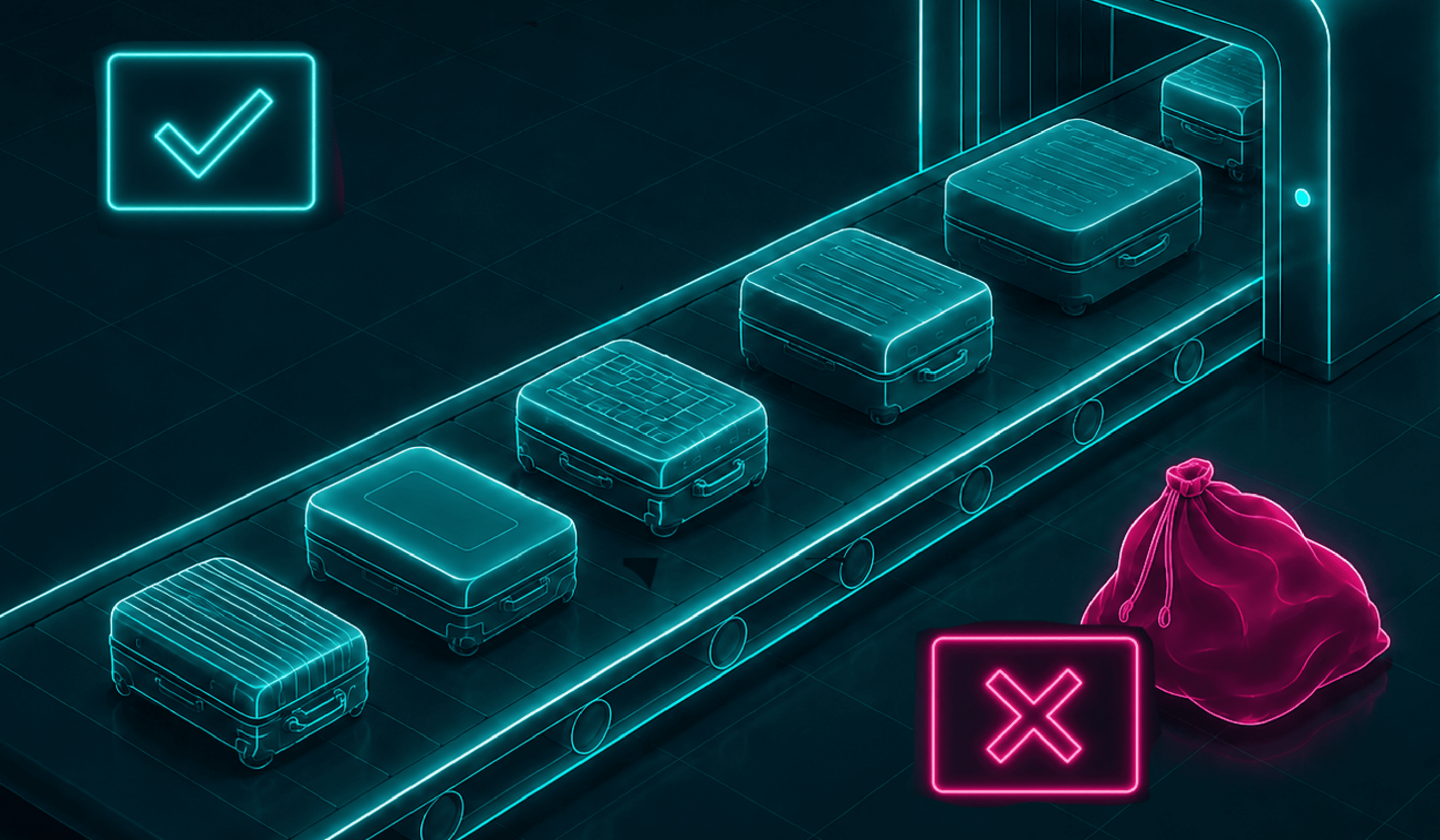
The logic can be compared well with automated baggage drop-off at the airport: a system can accept and forward a suitcase independently only if travel data, baggage tagging, weight, dimensions and destination can be clearly checked. If a piece of luggage deviates from the defined specifications or information is missing, the process becomes an exception and must be handled separately.
The situation is similar in procurement: Guided Buying or intake solutions can process requirements automatically and route them into the right processes only if processes, responsibilities, rules and master data are cleanly defined. This preparatory work is often underestimated. Technology cannot replace it; it can only digitally map what has previously been defined from a business and process perspective.
User guidance becomes a success factor
For these rules to be used in everyday work, simple and consistent user guidance is needed. Employees should not have to know whether a product comes from a supplier catalog, a marketplace, a framework agreement or inventory. Modern Guided Buying solutions therefore bundle different procurement channels behind a central search and entry interface. In the background, the systems automatically decide which procurement path is used for a requirement. This is supplemented by AI-supported functions for search, automated compliance checks, data suggestions and role-based approvals. This creates a user experience that increasingly resembles familiar digital consumer platforms, while taking company-specific procurement rules into account.
The role of procurement is changing fundamentally
The more strongly operational procurement is automated, the more profoundly the role of procurement itself changes. Manual review and routing processes move into the background. Procurement departments instead increasingly focus on supplier management, market monitoring, advising internal departments and optimizing procurement strategies.
Advanced organizations are consciously driving precisely this change and creating space for these more value-adding activities. At the same time, however, the demands placed on procurement organizations themselves are also increasing. Analytical skills, market understanding and communication competence are increasingly required – less so classic administrative processing.
Standardization becomes an economic factor
The economic benefit of standardized procurement goes far beyond process acceleration. Companies not only reduce operational effort, but also increase transparency, compliance and control. Especially in economically strained times, this development is gaining additional importance. Companies are deliberately reducing the variety of options within their catalogs and standardizing procurement more strongly than before. Instead of providing numerous alternatives, they allow only a small number of specifically defined products or suppliers. The rationale is pragmatic: fewer variants can reduce process costs, simplify control and strengthen the negotiating position with suppliers.
Conclusion
Standardization is increasingly becoming the central prerequisite for the automation of operational procurement. Only standard content enables companies to process requirements in a rule-based, efficient way and largely without manual intervention. Guided Buying and modern intake solutions therefore unfold their value not through attractive, intuitive user interfaces alone, but through the combination of standardization, clear process logic and automation in the background.
For procurement organizations, this means a profound change: away from operational case-by-case processing and toward a more controlling, strategic and data-based function. Companies that consistently take this step not only create more efficient processes, but also increase the scalability and future viability of their procurement over the long term.