




Procurement departments face the structural decision of whether a single “suite” should cover the entire source-to-pay scope, or whether specialised, ERP-proximate solutions for specific segments represent the more robust choice. The starting point for any architecture is the ERP as the system of record: this is where master data, transactions, authorisations and business rules reside. Every procurement application must therefore interact reliably with the ERP. If this aspect is only considered retrospectively, complexity shifts into integration layers – making implementation projects longer, creating risks for process stability and driving additional follow-on costs.
Two worlds with different rhythms
In the strategic area (source-to-contract), the focus is on supplier selection and qualification, contract design and compliance evidence. These activities are less transactional; they primarily require clean master data and clear rules. The user base is limited, and synchronisations with the ERP can take place at planned intervals without disrupting operations. The critical factors are functional coverage and the ability to manage content such as contracts, certificates and evaluations in a structured way.
By contrast, the operational area (procure-to-pay) involves requestors (often hundreds to thousands of employees) looking for different goods and services and placing orders daily through various procurement channels. This generates high document volumes and a constant need for consistent, up-to-date data – from prices, stock, cost center budgets and account assignments through approval logic to goods receipt and invoicing. Errors in the data have immediate effects here: they create queries, corrections and process interruptions. Robust connections to the ERP, ideally working in real time, a guided user experience and clear orchestration of procurement channels are therefore essential to ensure that even occasional users complete processes in compliance.
Why the one-suite approach reaches its limits in practice
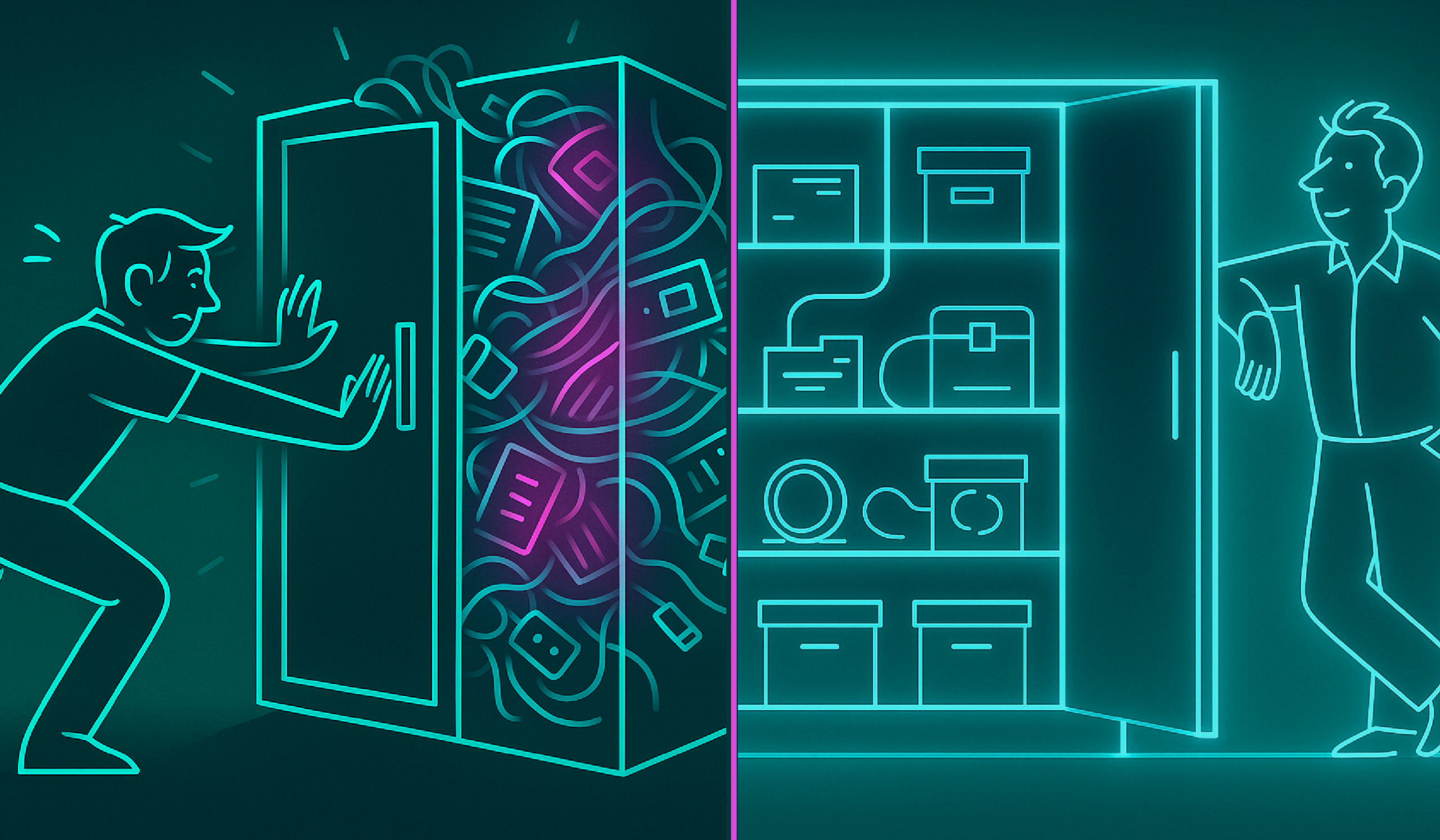
Organisationally, “everything in one box” looks attractive. In reality, however, sourcing, contract and supplier management, and operational requisitioning and ordering each require different data at different frequencies – and interact separately with the ERP. When this heterogeneity is concealed behind an apparently uniform interface, effort and risk shift into middleware, mapping tables and manual workarounds. Typical consequences include redundant data storage, inconsistent rule sets and rising maintenance overheads – particularly where speed and transaction security are critical. Moreover, a uniform integration logic across all modules often leads to compromises in the wrong places: strategic modules are driven unnecessarily fast, while operational modules are not fast enough – undermining data quality, compliance and total cost of ownership.
Advantages of specialised, ERP-integrated solutions
An architectural approach that consistently treats the ERP as the sole authoritative source of truth reduces frictional losses. Master data, permissions and workflows are not duplicated but reused; changes apply consistently throughout the process. In operational procurement, real-time mechanisms on ERP-proximate interfaces ensure accurate documents in ordering, goods receipt and invoicing. Different procurement channels – catalogues, framework agreements, own stock, marketplaces or free-text requests – can be orchestrated so that users are guided reliably to the appropriate path. The result: fewer media breaks, lower error rates and better manageability in high-volume operations. On the strategic side, modules with low transaction volumes remain flexible and can run at their own pace without burdening operational processes.
A target model with clear interfaces
The comparison results in a robust target model: strategic modules synchronise periodically with the ERP and focus on content and compliance management. Operational modules work closely – ideally in real time – with the ERP, adopt existing rules and ensure consistent transactions. This keeps transactional authority in the ERP, while user interfaces specialise where user guidance and scalability have the greatest impact. The architecture avoids duplicate data maintenance, reduces integration and maintenance effort, and supports clear governance across roles, approvals and policies.
Context and outlook
Suite and best-of-breed solutions are not opposites but different ways of steering a heterogeneous process landscape. The suite concept reduces vendor diversity and appears administratively straightforward – but risks underestimating operational friction points if ERP reality is not consistently accounted for. ERP-adjacent Best-of-Breed solutions such as those from BeNeering explicitly address this reality: they deliver depth where transactions, speed and compliance dominate day-to-day operations, while allowing strategic modules to run at their own pace. The right architecture depends on the specific environment – in particular data flows, user groups, the integration capability of the existing ERP and the desired maturity level of processes. An open, fact-based comparison along these criteria provides clarity – beyond the labels.